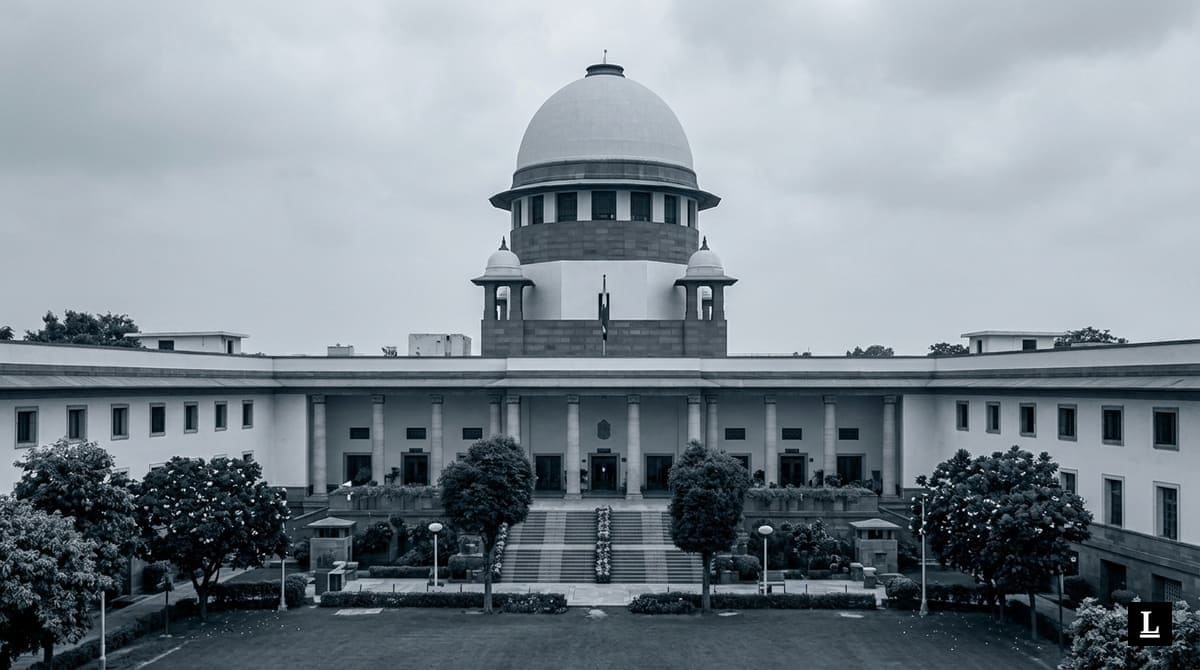
Supreme Court of India
The Doctrine of Legitimate Expectation: A Pillar of Fairness in Indian Administrative Law
This deep dive explores the evolution and application of the doctrine of legitimate expectation, a vital principle ensuring fair play and non-arbitrariness in governmental decision-making. It distinguishes between procedural and substantive expectations and outlines the doctrine's limitations and interplay with public interest.
 By LuricIO Intelligence

The doctrine of legitimate expectation, a cornerstone of administrative law, holds that public authorities must act fairly and consistently with their past conduct or representations, especially when such actions have led individuals to reasonably expect a certain outcome or procedure. This principle, while not creating an enforceable legal right in itself, provides a basis for judicial review where an authority deviates from such an expectation without a compelling public interest justification, thereby ensuring fairness and preventing arbitrary action by the State.
The Genesis and Evolution in India
The doctrine of legitimate expectation originated in English public law, notably articulated in the Council of Civil Service Unions v. Minister for the Civil Service (the GCHQ case) in 1985. The Indian Supreme Court embraced this doctrine to infuse greater fairness and non-arbitrariness into administrative actions. Early Indian cases like Food Corporation of India v. Kamdhenu Cattle Feed Industries (1992) and Navjyoti Co-operative Group Housing Society v. Union of India (1992) were pivotal in its adoption. These judgments established that a legitimate expectation could arise either from an express promise given by a public authority or from a consistent past practice. The Court recognised that while such an expectation does not confer an absolute right, its arbitrary defeat without due process or overriding public interest could be subject to judicial scrutiny under Article 226 or Article 32 of the Constitution.
Defining Legitimate Expectation
For an expectation to be considered 'legitimate', it must be founded on a reasonable premise. The Supreme Court, in Union of India v. Hindustan Development Corporation (1993), clarified that a legitimate expectation can arise in three situations:
- Express Promise: Where a public authority makes an express promise or representation to an individual or a group.
- Consistent Practice: Where there has been a regular and consistent past practice by the public authority, leading individuals to reasonably expect its continuance.
- Policy or Scheme: Where a policy document or a scheme published by the authority creates an expectation.
Crucially, the expectation must be reasonable and rational, not merely a hope or desire. It must be one that the public authority could legitimately be expected to honour, having regard to its public duty and the context in which the expectation arose.
Procedural vs. Substantive Expectations
The doctrine distinguishes between two types of legitimate expectations:
- Procedural Legitimate Expectation: This arises when an individual expects to be accorded a particular procedure before a decision affecting them is taken. For instance, expecting a hearing or consultation based on past practice or an assurance. Courts are generally more willing to enforce procedural legitimate expectations, as they relate to fairness in the decision-making process itself.
- Substantive Legitimate Expectation: This arises when an individual expects to receive a particular benefit or outcome. For example, expecting a license to be renewed based on a policy. Enforcing substantive legitimate expectations is more complex, as it can impinge on the executive's policy-making powers. The courts typically balance the individual's expectation against the public interest and the need for the administration to adapt its policies.
In Punjab Communications Ltd. v. Union of India (1999), the Supreme Court elaborated on this distinction, holding that while procedural legitimate expectations are generally upheld, substantive ones can be denied if there is an overriding public interest or a change in policy that is not arbitrary or irrational.
The Limits of the Doctrine
Despite its importance, the doctrine of legitimate expectation is not absolute and is subject to several limitations:
- Public Interest: The most significant limitation is that a legitimate expectation cannot override a compelling public interest. If a public authority demonstrates that departing from the expectation is necessary in the larger public interest, the expectation may be defeated.
- Statutory Provisions: An expectation cannot be legitimate if it is contrary to a statute or statutory rules. Public authorities cannot act ultra vires their powers.
- Policy Changes: Governments and public bodies must have the flexibility to change policies. A legitimate expectation cannot prevent a genuine and rational change in policy, provided the change is not arbitrary or mala fide.
- No Vested Right: The doctrine does not create a vested legal right. It merely provides a ground for judicial review if the expectation is defeated arbitrarily or without due process.
Distinction from Promissory Estoppel
While both doctrines aim to ensure fairness in administrative action, they operate on different premises. Promissory estoppel requires a clear, unequivocal promise, reliance by the promisee, and detriment suffered due to such reliance. It is generally invoked to enforce a promise. Legitimate expectation, on the other hand, does not necessarily require a promise or detriment. It can arise from consistent practice or policy and focuses on the fairness of the administrative process or the rationality of the decision to depart from an established course. Promissory estoppel often creates an enforceable right, whereas legitimate expectation primarily provides a basis for judicial review of administrative discretion, ensuring that the decision to defeat the expectation is not arbitrary or irrational. The Supreme Court has often clarified that while there might be an overlap, the two doctrines are distinct in their scope and application.
Before the formal adoption of the doctrine of legitimate expectation, Indian administrative law relied heavily on principles of natural justice and the rule against arbitrariness (Article 14 of the Constitution) to ensure fairness. The doctrine emerged as a sophisticated tool to address situations where an individual might not have a strict legal right but had a reasonable expectation based on the administration's conduct. Its evolution reflects a global trend in public law to enhance accountability and predictability in governmental actions, moving beyond mere legality to encompass fairness and good administration.
For an ordinary citizen or litigant, the doctrine of legitimate expectation means that government bodies and public authorities cannot act arbitrarily or capriciously. If a public body has consistently followed a certain procedure or made a clear representation, citizens can reasonably expect that practice or promise to be honoured. This provides a crucial check against sudden, unexplained changes in policy or procedure that could adversely affect individuals, ensuring a degree of predictability and fairness in dealings with the State.
Have a question on this?
Ask LuricIO AI about this judgement, the provisions involved, or your own matter, and get a court-ready answer.
An evergreen explainer by LuricIO Intelligence on a landmark judgement or key provision of Indian law. Always confirm the current statute and the latest authorities against the official record.
An AI-generated explainer by LuricIO Intelligence on a key provision or landmark judgement of Indian law. It may contain errors and is not legal advice, independently verify the current statute and the latest judgements against the official record before relying on it.
Related analyses
See all in Supreme CourtSupreme Court of India
Supreme Court to Examine Plea to Recall Split Verdict on Election Commissioner Appointments
3 min read
Supreme Court of India
Delhi High Court Orders Forensic Audit of Fortis Transactions; Supreme Court to Review 'Reverse Veil Piercing'
4 min read

Supreme Court of India
Prospective Overruling: Balancing Legal Evolution with Stability in Indian Jurisprudence
4 min read

Supreme Court of India
Article 12: Defining 'State' for Fundamental Rights Enforcement in India
4 min read