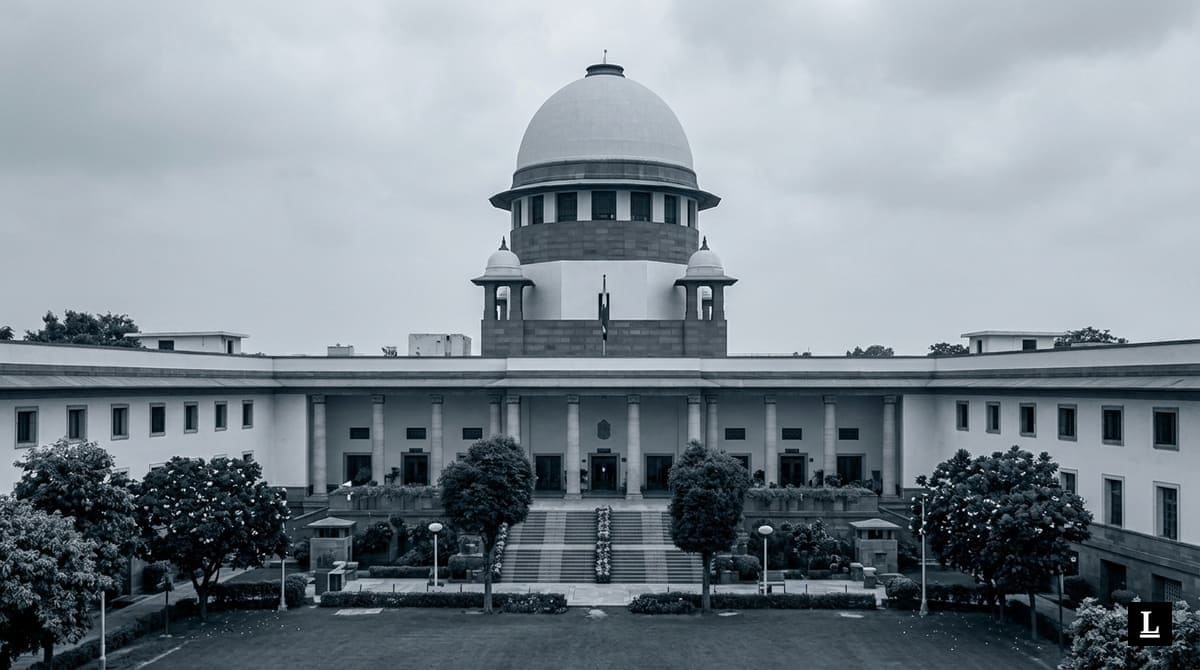
Supreme Court of India
Delhi High Court Orders Forensic Audit of Fortis Transactions; Supreme Court to Review 'Reverse Veil Piercing'
The Delhi High Court has directed a forensic audit into past transactions involving former promoters of Fortis Healthcare, a decision now under challenge before the Supreme Court. This ruling stems from efforts to enforce an arbitral award and raises significant questions about corporate liability and investor confidence.
 By LuricIO Intelligence

The Delhi High Court recently ordered a forensic audit of transactions linked to the former promoters of Fortis Healthcare, Malvinder and Shivinder Mohan Singh. This directive, issued on August 31, 2026, emerged in the context of Japanese firm Daiichi Sankyo's efforts to enforce an arbitral award against these erstwhile promoters. Fortis Healthcare has since filed a Special Leave Petition (SLP) before the Supreme Court, challenging the High Court's order, particularly its implications regarding the doctrine of 'reverse veil piercing'.
The High Court's Directive and Its Basis
The Delhi High Court's decision to mandate a forensic audit is a significant step in corporate governance and dispute resolution. While the court clarified that the audit is primarily a fact-finding exercise and does not, by itself, impose liability, its potential to uncover irregularities can have far-reaching consequences. Such audits are typically ordered when there are suspicions of financial impropriety, fraud, or mismanagement, especially when assets may have been siphoned off or transactions conducted to evade liabilities. In this instance, the audit is linked to the enforcement of an arbitral award, suggesting that the court is exploring avenues to ensure the award's effective execution against the former promoters, potentially by examining how corporate assets or structures were used.
Challenging 'Reverse Veil Piercing' in India
A central point of contention in Fortis Healthcare's appeal to the Supreme Court is the doctrine of 'reverse veil piercing'. This legal concept, if applied, could potentially make a company's assets liable for the personal debts or obligations of its (erstwhile) controlling shareholders. Fortis has argued in its SLP that this doctrine has not been formally recognised by Indian courts. Traditionally, Indian jurisprudence, like many common law systems, has focused on 'lifting the corporate veil' (or 'piercing the corporate veil'), where the separate legal personality of a company is disregarded to hold individuals (shareholders or directors) liable for the company's actions, particularly in cases of fraud or to prevent evasion of statutory obligations. Reverse veil piercing, however, seeks to do the opposite: hold the company liable for the personal actions or debts of its shareholders. The Supreme Court's consideration of this challenge could set an important precedent for corporate liability in India.
Investor Concerns and Market Implications
Institutional investors, both domestic and foreign, holding a significant stake in Fortis Healthcare, have expressed considerable concern over the Delhi High Court's order. Their apprehension stems from the potential for a reputational overhang and a dampening effect on investor confidence. The transactions in question occurred nearly a decade ago and had reportedly cleared various regulatory hurdles, including approvals from the company's board, shareholders, the Competition Commission of India (CCI), and the Securities and Exchange Board of India (SEBI) under the Takeover Code. Investors argue that questioning such long-settled transactions through a forensic audit, especially after a change in controlling ownership (IHH Healthcare acquired a significant stake in 2018), could create prolonged uncertainty. This uncertainty is viewed as detrimental to the company's stability and attractiveness to capital, which is inherently mobile and seeks predictable legal and regulatory environments. The outcome of the Supreme Court's review will therefore be closely watched by the broader investment community.
What This Means for Corporate Governance
This case highlights the ongoing tension between ensuring corporate accountability and providing a stable environment for business operations and investment. While forensic audits are crucial tools for uncovering financial misconduct, their application to historical transactions, particularly after a change in control, raises questions about the finality of regulatory approvals and the potential for endless litigation. The Supreme Court's decision on the applicability of 'reverse veil piercing' will be pivotal. If recognised, it could provide a new mechanism for creditors to recover dues from individuals by targeting corporate assets, but it could also introduce complexities for corporate structures and M&A activities. Conversely, if rejected, it would reinforce the traditional understanding of corporate separateness, albeit potentially limiting avenues for recovery in certain scenarios.
A Practical Checklist for Advocates
Advocates dealing with corporate disputes, particularly those involving arbitral award enforcement and allegations against former promoters, should closely monitor the Supreme Court's pronouncements. Key considerations include:
- Scope of Forensic Audits: Understand the specific parameters and objectives when a court orders a forensic audit, and its distinction from an imposition of liability.
- Corporate Veil Doctrines: Be prepared to argue for or against the application of 'lifting the corporate veil' and, crucially, the emerging concept of 'reverse veil piercing', citing relevant precedents.
- Regulatory Approvals: Emphasise the significance of prior regulatory approvals (CCI, SEBI, etc.) for transactions and their bearing on subsequent legal challenges.
- Investor Sentiment: Advise clients on the potential impact of prolonged legal proceedings on investor confidence and market perception, especially in publicly listed entities.
Have a question on this?
Ask LuricIO AI about this judgement, the provisions involved, or your own matter, and get a court-ready answer.
This is LuricIO's independent analysis. For the original report, quotes, and full coverage, read the source.
LuricIO Intelligence's AI-generated analysis of this development and the law behind it. It may contain errors and is not legal advice, independently verify the facts and the primary source against the official record before relying on it.
Related analyses
See all in Supreme CourtSupreme Court of India
Supreme Court to Examine Plea to Recall Split Verdict on Election Commissioner Appointments
3 min read
Supreme Court of India
Prospective Overruling: Balancing Legal Evolution with Stability in Indian Jurisprudence
4 min read

Supreme Court of India
Article 12: Defining 'State' for Fundamental Rights Enforcement in India
4 min read
Supreme Court of India
Clemency Powers: Articles 72 and 161 of the Indian Constitution
4 min read