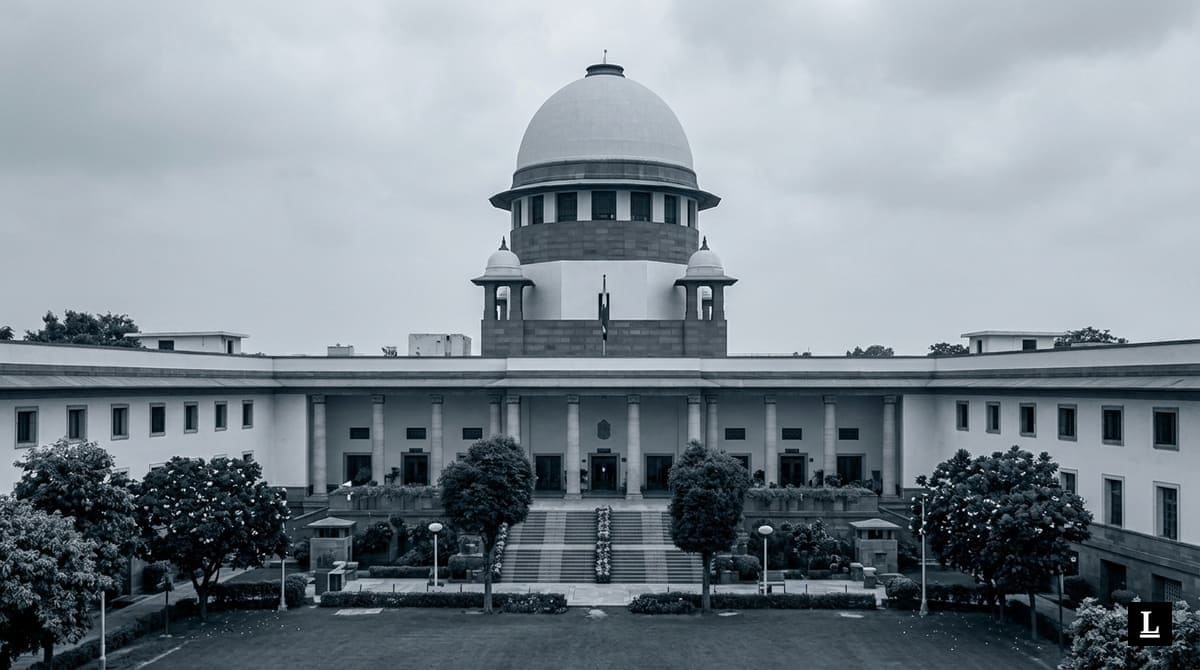
Supreme Court of India
Clemency Powers: Articles 72 and 161 of the Indian Constitution
The President and Governors possess constitutional clemency powers, enabling them to grant pardons, reprieves, respites, remissions, or commutations of sentences. These executive powers serve as a vital safeguard against judicial error and allow for humanitarian considerations in the justice system.
 By LuricIO Intelligence

The power to grant mercy, known as clemency, is a fundamental aspect of the Indian justice system, vested in the President of India under Article 72 and the Governors of States under Article 161 of the Constitution. These powers are executive in nature, distinct from judicial review, and serve as a final recourse for individuals convicted of offences, allowing for the correction of potential miscarriages of justice or the application of humanitarian considerations.
The Constitutional Grant of Clemency
Article 72 of the Constitution empowers the President to grant pardons, reprieves, respites, or remissions of punishment or to suspend, remit, or commute the sentence of any person convicted of any offence:
- in all cases where the punishment or sentence is by a Court Martial;
- in all cases where the punishment or sentence is for an offence against any law relating to a matter to which the executive power of the Union extends; and
- in all cases where the sentence is a sentence of death.
Similarly, Article 161 grants the Governor of a State the power to grant pardons, reprieves, respites, or remissions of punishment or to suspend, remit, or commute the sentence of any person convicted of any offence against any law relating to a matter to which the executive power of the State extends.
Scope and Forms of Clemency
The clemency powers encompass several distinct forms:
- Pardon: Completely absolves the convict of all punishment and disqualifications, restoring them to their original position as if no conviction had occurred.
- Reprieve: Grants a temporary suspension of the execution of a sentence, particularly a death sentence, to allow the convict time to seek a pardon or commutation.
- Respite: Awards a lesser sentence than originally awarded due to special facts, such as the physical disability of the convict or pregnancy of a woman offender.
- Remission: Reduces the period of the sentence without changing its character (e.g., a sentence of rigorous imprisonment for five years may be remitted to rigorous imprisonment for three years).
- Commutation: Substitutes one form of punishment for another of a lighter character (e.g., a death sentence may be commuted to rigorous imprisonment, or rigorous imprisonment to simple imprisonment).
These powers are exercised on the aid and advice of the Council of Ministers, either at the Union level for the President or the State level for the Governor. The decision is not a right of the convict but an act of grace by the executive.
Distinction Between Presidential and Gubernatorial Powers
While both the President and Governors possess clemency powers, there are crucial differences:
- The President can grant pardon in all cases where the sentence is a sentence of death, whereas the Governor's power under Article 161 does not extend to death sentences. A Governor can only suspend, remit, or commute a death sentence, but cannot pardon it. The ultimate power to pardon a death sentence rests solely with the President.
- The President's power extends to sentences inflicted by Court Martials, a jurisdiction not available to Governors.
- The President's power covers offences against laws relating to matters within the Union's executive power, while the Governor's power covers offences against laws relating to matters within the State's executive power.
Judicial Review and its Limits
The exercise of clemency powers, though executive, is not entirely immune from judicial review. The Supreme Court has clarified the scope of this review in landmark judgments. In Kehar Singh v. Union of India (1989), the Court held that the President's power under Article 72 is not subject to judicial review on its merits. However, it can be reviewed if the decision is arbitrary, irrational, mala fide, or based on extraneous or irrelevant considerations. The Court cannot substitute its own judgment for that of the President.
Further, in Epuru Sudhakar v. Government of Andhra Pradesh (2006), the Supreme Court reiterated and expanded on the grounds for judicial review, stating that a clemency order can be challenged if:
- It was passed without application of mind.
- It was based on extraneous or irrelevant considerations.
- It was actuated by mala fides.
- It was passed on considerations that are ultra vires.
- It suffers from arbitrariness.
This limited judicial oversight ensures that the exercise of these significant powers adheres to constitutional principles and prevents their misuse.
Principles Guiding the Exercise of Power
The executive, while exercising clemency, typically considers various factors, including the gravity of the offence, the circumstances of the case, the character and antecedents of the offender, the age, health, and family circumstances of the convict, and the overall public interest. The process usually involves a recommendation from the Ministry of Home Affairs (for the President) or the State Home Department (for the Governor), which examines the case records, court judgments, and any petitions filed by or on behalf of the convict. The decision is ultimately a policy matter, balancing justice with mercy and societal welfare.
The concept of clemency has deep historical roots, stemming from the monarch's prerogative of mercy in many legal systems. In India, the framers of the Constitution consciously vested these powers in the President and Governors, recognizing the need for an executive check on the judicial process. This ensures that even after the rigorous judicial scrutiny, there remains a mechanism to address unique circumstances, human fallibility, or evolving societal standards, thereby upholding the principles of justice, equity, and good conscience.
For an ordinary citizen or a litigant, the clemency powers offer a final ray of hope after all judicial remedies have been exhausted. It provides an avenue for mercy, especially in cases of death sentences or where compelling humanitarian grounds exist. While not a right, understanding this process allows convicts or their families to petition the President or Governor, presenting factors that might warrant a reduction or annulment of their sentence.
Have a question on this?
Ask LuricIO AI about this judgement, the provisions involved, or your own matter, and get a court-ready answer.
An evergreen explainer by LuricIO Intelligence on a landmark judgement or key provision of Indian law. Always confirm the current statute and the latest authorities against the official record.
An AI-generated explainer by LuricIO Intelligence on a key provision or landmark judgement of Indian law. It may contain errors and is not legal advice, independently verify the current statute and the latest judgements against the official record before relying on it.
Related analyses
See all in Supreme CourtSupreme Court of India
Supreme Court to Examine Plea to Recall Split Verdict on Election Commissioner Appointments
3 min read
Supreme Court of India
Delhi High Court Orders Forensic Audit of Fortis Transactions; Supreme Court to Review 'Reverse Veil Piercing'
4 min read

Supreme Court of India
Prospective Overruling: Balancing Legal Evolution with Stability in Indian Jurisprudence
4 min read

Supreme Court of India
Article 12: Defining 'State' for Fundamental Rights Enforcement in India
4 min read