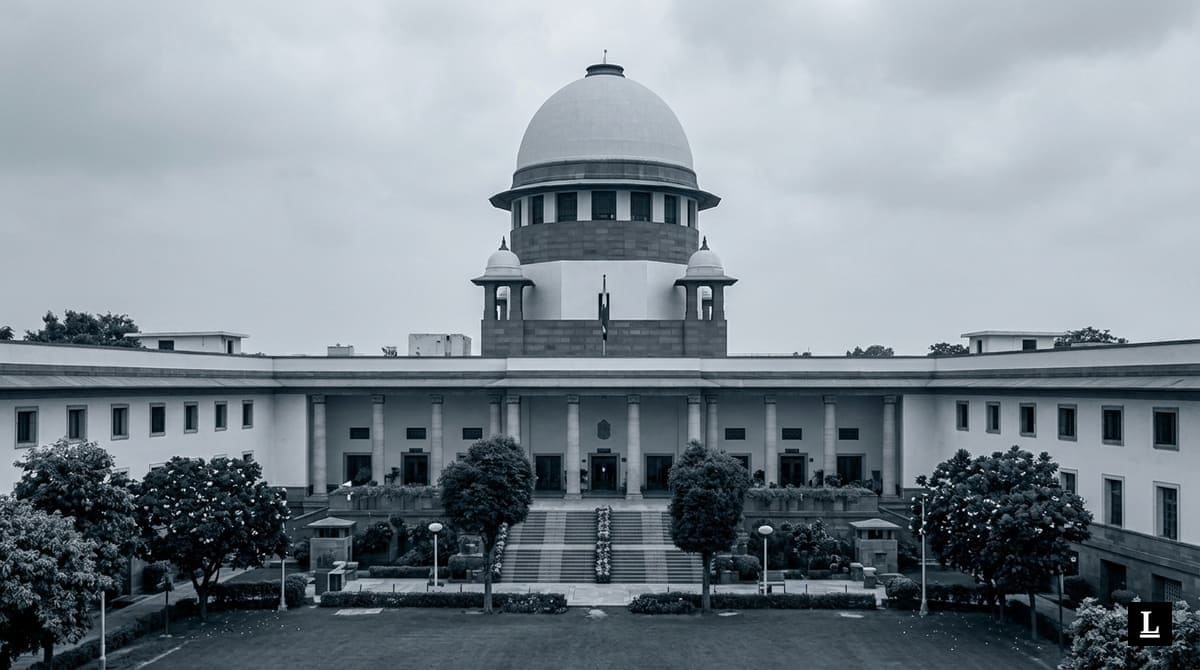
Supreme Court of India
R.D. Shetty (1979): Article 14 and Fairness in Government Contracts
The landmark judgment in Ramana Dayaram Shetty v. International Airport Authority of India established that state instrumentalities, even in contractual matters, are bound by the principles of Article 14, mandating fairness and non-arbitrariness. It significantly expanded the scope of judicial review over government actions in the commercial sphere.
 By LuricIO Intelligence

The Supreme Court in Ramana Dayaram Shetty v. International Airport Authority of India, (1979) 3 SCC 489, unequivocally held that the State and its instrumentalities, when entering into contracts or dealing with citizens, cannot act arbitrarily or capriciously. Their actions must be informed by reason, fairness, and public interest, adhering to the constitutional mandate of equality enshrined in Article 14 of the Constitution of India. This ruling extended the reach of Article 14 into the commercial and contractual domain of the State, ensuring that governmental power, even in its business dealings, remains subject to constitutional scrutiny.
The Factual Matrix and Legal Question
The case arose from a public notice issued by the International Airport Authority of India (IAAI), inviting tenders for running a second-class restaurant and two snack bars at the Bombay International Airport. The notice stipulated specific eligibility criteria, including that a tenderer must be a "registered IInd class Hotelier having at least 5 years experience." Despite these clear conditions, the IAAI awarded the contract to a bidder (Respondent No. 4) who did not meet the stipulated experience requirement. The appellant, Ramana Dayaram Shetty, who had not submitted a tender because he did not meet the eligibility criteria, challenged this decision. The central legal question before the Supreme Court was whether the IAAI, as an instrumentality of the State, could deviate from its own published tender conditions and act arbitrarily in awarding a contract, thereby violating Article 14.
The Court's Expansive Interpretation of Article 14
Building upon its earlier pronouncement in E.P. Royappa v. State of Tamil Nadu, (1974) 4 SCC 3, which famously declared that "equality is antithetic to arbitrariness," the Supreme Court in R.D. Shetty further elucidated the dynamic nature of Article 14. The Court reiterated that Article 14 strikes at arbitrariness in State action and ensures fairness and equality of treatment. It held that where the State, or its instrumentality, lays down conditions for eligibility, it is bound to adhere to them. Any deviation from these conditions without a valid, non-arbitrary reason would amount to an arbitrary act, directly infringing the equality clause. The Court clarified that the State cannot act like a private individual in its contractual dealings; its actions must always be guided by public interest and constitutional principles.
The Principle of Non-Arbitrariness in State Action
The judgment firmly established that the State, defined broadly under Article 12 to include statutory bodies like the IAAI, cannot act arbitrarily in any sphere of its activity, including contractual matters. The Court emphasized that when the State invites tenders and prescribes certain eligibility conditions, these conditions create a legitimate expectation among potential bidders that the process will be fair and transparent, and that only those meeting the criteria will be considered. To permit the State to disregard its own terms would be to sanction arbitrary action, which is anathema to the rule of law and the spirit of Article 14. The Court noted that while the State has the discretion to reject all tenders or negotiate directly in certain circumstances, this power does not extend to selectively waiving conditions for one bidder while enforcing them for others, as such an act would be discriminatory.
Impact and Subsequent Jurisprudence
R.D. Shetty marked a pivotal moment in Indian administrative law, significantly enhancing judicial review over governmental contracts. It laid the foundation for a more transparent and accountable approach to public procurement and resource allocation. The principles enunciated in this case were subsequently affirmed and expanded in numerous judgments. For instance, in Dwarkadas Marfatia and Sons v. Board of Trustees of the Port of Bombay, (1989) 3 SCC 293, the Supreme Court reiterated that public authorities, even when exempted from specific statutory regulations (like rent control acts), must act in the public interest and their actions are amenable to judicial review under Article 14. Similarly, in LIC of India v. Consumer Education and Research Centre, (1995) 5 SCC 482, the Court extended the principle of non-arbitrariness to contractual clauses in public sector insurance policies, holding that unfair or unreasonable clauses could be struck down under Article 14. These cases collectively underscore that the State, in all its manifestations, is bound by constitutional morality and the fundamental rights of citizens, ensuring that its actions are always just, fair, and non-arbitrary.
Before R.D. Shetty, the application of Article 14 to government contracts was less clear, with some views suggesting that the State, in its contractual capacity, could act more like a private party. The E.P. Royappa judgment (1974) had already established that arbitrariness is antithetical to equality, but R.D. Shetty specifically applied this principle to the contractual domain. This evolution ensured that the State's vast economic power, particularly in awarding contracts and distributing public largesse, was brought under the constitutional scanner, preventing favouritism and promoting transparency.
This judgment ensures that ordinary citizens and businesses dealing with government entities are treated fairly and without discrimination. It means that if a government body sets rules for contracts or services, it must follow those rules, preventing arbitrary decisions that could harm individuals or favour specific parties. Citizens can challenge unfair or arbitrary actions by the State in contractual matters, reinforcing their right to equality before the law.
Have a question on this?
Ask LuricIO AI about this judgement, the provisions involved, or your own matter, and get a court-ready answer.
An evergreen explainer by LuricIO Intelligence on a landmark judgement or key provision of Indian law. Always confirm the current statute and the latest authorities against the official record.
An AI-generated explainer by LuricIO Intelligence on a key provision or landmark judgement of Indian law. It may contain errors and is not legal advice, independently verify the current statute and the latest judgements against the official record before relying on it.
Related analyses
See all in Supreme CourtSupreme Court of India
Supreme Court to Examine Plea to Recall Split Verdict on Election Commissioner Appointments
3 min read
Supreme Court of India
Delhi High Court Orders Forensic Audit of Fortis Transactions; Supreme Court to Review 'Reverse Veil Piercing'
4 min read

Supreme Court of India
Prospective Overruling: Balancing Legal Evolution with Stability in Indian Jurisprudence
4 min read

Supreme Court of India
Article 12: Defining 'State' for Fundamental Rights Enforcement in India
4 min read