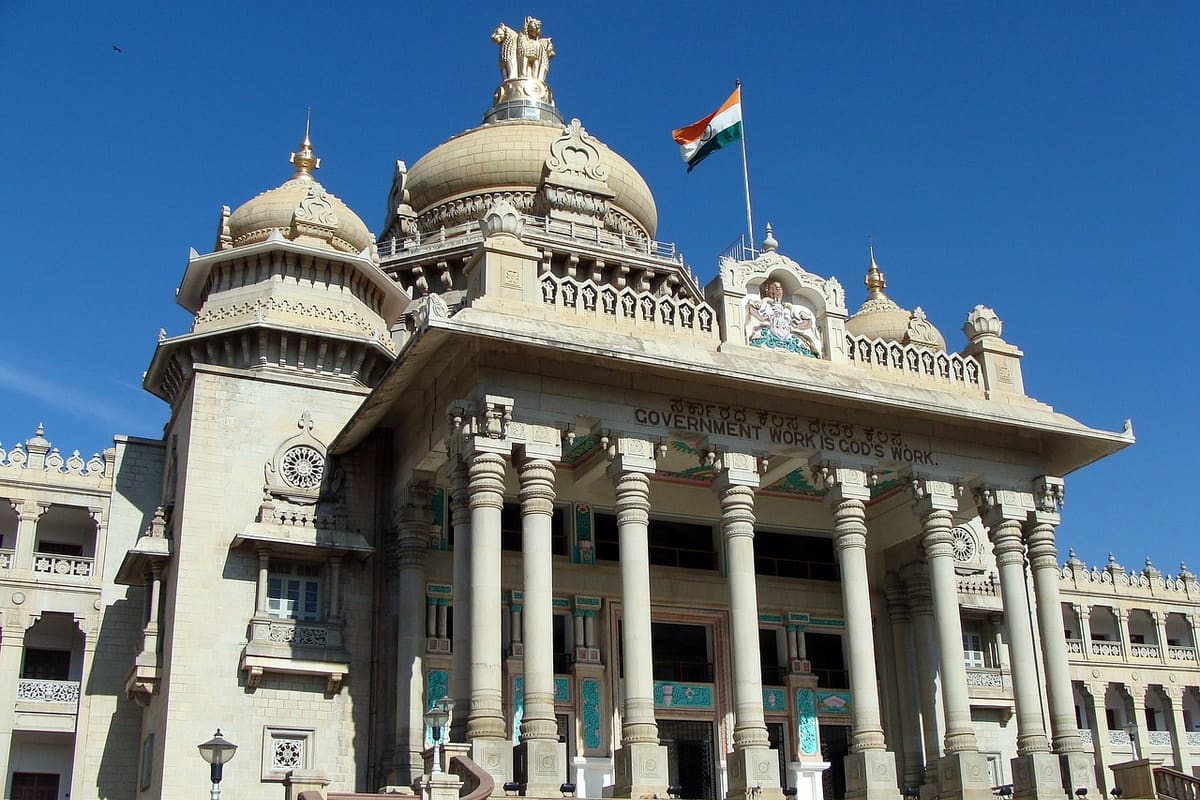
Supreme Court of India
Janhit Abhiyan: Upholding EWS Reservation and Redefining Affirmative Action
The Supreme Court, in a landmark 3:2 majority, upheld the constitutional validity of the 103rd Amendment, introducing 10% reservation for Economically Weaker Sections. This decision significantly expanded the scope of affirmative action in India, allowing for reservations based solely on economic criteria.
 By LuricIO Intelligence

The Supreme Court of India, in its pivotal decision in Janhit Abhiyan v. Union of India (2022), affirmed the constitutional validity of the Constitution (One Hundred and Third Amendment) Act, 2019. This amendment introduced a 10% reservation for Economically Weaker Sections (EWS) in admissions to educational institutions and appointments in public services. The 3:2 majority ruling by a five-judge Constitution Bench marked a significant shift in India's reservation policy, allowing for affirmative action based purely on economic criteria, independent of social and educational backwardness.
The 103rd Constitutional Amendment and the Challenge
The Constitution (One Hundred and Third Amendment) Act, 2019, inserted clauses (6) into Article 15 and Article 16 of the Constitution of India. These new clauses empowered the State to make special provisions, including reservations up to 10%, for the advancement of any economically weaker sections of citizens, other than those already covered by existing reservations for Scheduled Castes (SCs), Scheduled Tribes (STs), and Other Backward Classes (OBCs). This legislative action was swiftly challenged through numerous writ petitions, consolidated under the lead case of Janhit Abhiyan v. Union of India, primarily on the grounds that it violated the basic structure of the Constitution.
The Core Legal Questions Before the Supreme Court
The five-judge bench, comprising Chief Justice U.U. Lalit and Justices Dinesh Maheshwari, S. Ravindra Bhat, B.M. Trivedi, and J.B. Pardiwala, considered several fundamental questions regarding the amendment's validity. These included:
- Whether reservations could be granted solely on the basis of economic criteria, departing from the traditional focus on social and educational backwardness.
- Whether the exclusion of SCs, STs, and OBCs from the EWS quota was discriminatory and violated the equality code.
- Whether the amendment breached the 50% ceiling limit on reservations, famously established in Indira Sawhney v. Union of India (1992).
- Whether the 103rd Amendment violated the basic structure of the Constitution.
The Majority's Rationale: Upholding Economic Reservation
By a 3:2 majority, the Supreme Court upheld the constitutional validity of the 103rd Amendment. Justices Dinesh Maheshwari, B.M. Trivedi, and J.B. Pardiwala delivered separate but concurring opinions. The majority reasoned that economic backwardness could indeed be a valid criterion for affirmative action, distinct from social and educational backwardness. They held that the EWS quota constituted a separate and distinct category of reservation and did not infringe upon the existing reservations for SCs, STs, and OBCs.
Crucially, the majority concluded that the 103rd Amendment did not violate the basic structure of the Constitution. On the contentious issue of the 50% ceiling, the majority opined that this limit, while generally applicable, was not inflexible and could be exceeded in certain circumstances, particularly for EWS, as it addressed a different form of disadvantage.
The Dissenting View: Concerns on Exclusion and the 50% Ceiling
Chief Justice U.U. Lalit and Justice S. Ravindra Bhat authored the dissenting opinions. Justice Bhat, with whom CJI Lalit concurred, argued that the exclusion of SCs, STs, and OBCs from the EWS quota was discriminatory and violated the equality code, thereby infringing upon the basic structure of the Constitution. They contended that reservations should primarily address social and educational backwardness, and that solely economic criteria for reservation was problematic. The dissenting judges also expressed concerns that exceeding the 50% reservation ceiling, even for EWS, could undermine the principle of equality and the established framework of reservations.
Impact and Future Implications
The Janhit Abhiyan judgment has solidified the 10% EWS quota into Indian law, significantly broadening the scope of affirmative action. It acknowledges economic backwardness as a legitimate basis for reservation, a departure from the historical emphasis on social and educational disadvantage. The ruling also re-evaluated the flexibility of the 50% reservation ceiling, suggesting it is not an absolute bar in all contexts. This decision is expected to influence future policy-making and legal interpretations concerning reservation, potentially paving the way for further discussions on the nature and extent of affirmative action in India.
The concept of reservation in India has historically been rooted in addressing social and educational backwardness, as enshrined in Articles 15(4), 15(5), and 16(4) of the Constitution. Landmark judgments like Indira Sawhney v. Union of India (1992) established the 50% ceiling on reservations and affirmed that economic criteria alone could not be the sole basis for reservation. The 103rd Amendment and the Janhit Abhiyan judgment represent a significant evolution, introducing economic status as an independent ground for affirmative action and re-examining the rigidity of the 50% limit.
For ordinary citizens, this judgment means that individuals from economically weaker sections, who are not covered by existing SC, ST, or OBC reservations, can now avail a 10% quota in government jobs and educational institutions. This provides a new avenue for upward mobility based on economic criteria. However, it also means that SC, ST, and OBC individuals, even if economically weak, cannot benefit from this specific 10% EWS quota, as it is designed for those outside the traditional reservation categories.
Have a question on this?
Ask LuricIO AI about this judgement, the provisions involved, or your own matter, and get a court-ready answer.
An evergreen explainer by LuricIO Intelligence on a landmark judgement or key provision of Indian law. Always confirm the current statute and the latest authorities against the official record.
An AI-generated explainer by LuricIO Intelligence on a key provision or landmark judgement of Indian law. It may contain errors and is not legal advice, independently verify the current statute and the latest judgements against the official record before relying on it.
Related analyses
See all in Supreme CourtSupreme Court of India
Waman Rao v. Union of India (1981): Defining the Limits of Ninth Schedule Immunity
3 min read

Supreme Court of India
Separation of Powers: India's Constitutional Architecture of Checks and Balances
4 min read

Supreme Court of India
S.P. Sampath Kumar: Upholding Tribunals with Judicial Review Safeguards
4 min read

Supreme Court of India
Golaknath v. State of Punjab: Parliament's Limited Power to Amend Fundamental Rights
4 min read