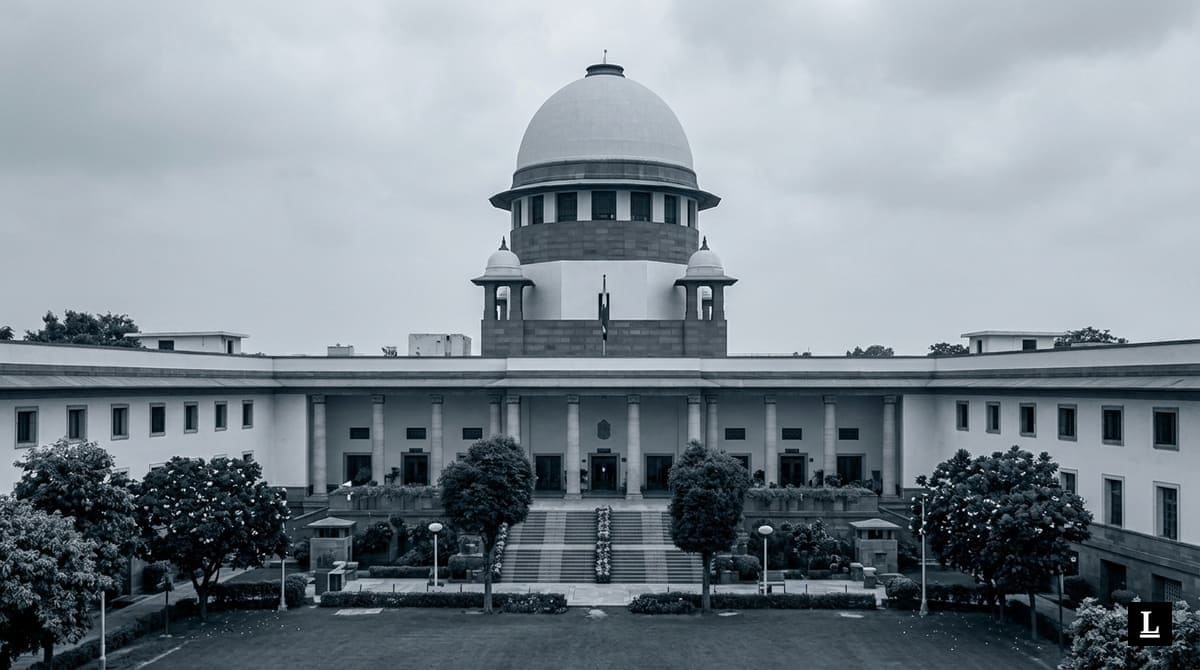
Supreme Court of India
Indira Gandhi v. Raj Narain: Basic Structure Doctrine Strikes Down 39th Amendment
The Supreme Court applied the Basic Structure doctrine to invalidate a constitutional amendment that sought to remove judicial review over high-office elections. This landmark ruling reaffirmed the judiciary's role as the Constitution's ultimate guardian.
 By LuricIO Intelligence

The Supreme Court of India, in the landmark judgment of Smt. Indira Nehru Gandhi v. Shri Raj Narain (1975), decisively applied the Basic Structure doctrine to strike down Clause (4) of Article 329A of the Constitution, which had been introduced by the 39th Constitutional Amendment. This ruling reaffirmed the judiciary's power of review over constitutional amendments and underscored that fundamental tenets like free and fair elections, judicial review, and the separation of powers are beyond the amending power of Parliament.
The Genesis of the Dispute: Election Petition and the 39th Amendment
The legal battle originated from the 1971 Lok Sabha elections, where Smt. Indira Nehru Gandhi, the then Prime Minister, won from the Rae Bareli constituency. Her opponent, Shri Raj Narain, filed an election petition in the Allahabad High Court, alleging corrupt electoral practices under the Representation of the People Act, 1951. On June 12, 1975, the Allahabad High Court found Mrs. Gandhi guilty of certain corrupt practices, declared her election void, and disqualified her from holding any elective office for six years.
This judgment led to a political crisis. Mrs. Gandhi appealed to the Supreme Court, which granted a conditional stay, allowing her to remain Prime Minister but not to vote in Parliament. In response, during the period of national Emergency, Parliament swiftly enacted the Constitution (39th Amendment) Act, 1975, on August 10, 1975. This amendment inserted a new Article 329A into the Constitution, specifically designed to place the election of the President, Vice-President, Prime Minister, and Speaker of the Lok Sabha beyond the scrutiny of any court. Crucially, Clause (4) of Article 329A retrospectively declared that the election of a person holding the office of Prime Minister or Speaker could not be challenged before any court, and any pending election petition concerning such elections would become void. This provision directly aimed to nullify the Allahabad High Court's judgment against Mrs. Gandhi.
The Challenge to the 39th Amendment and the Basic Structure Doctrine
The constitutional validity of the 39th Amendment, particularly Article 329A(4), was immediately challenged before the Supreme Court. The core argument was that the amendment violated the Basic Structure doctrine of the Constitution, a principle enunciated by the Supreme Court in Kesavananda Bharati v. State of Kerala (1973). That landmark ruling had established that while Parliament has the power to amend the Constitution under Article 368, this power does not extend to altering or destroying its fundamental features or its "basic structure."
The Supreme Court, comprising Chief Justice A.N. Ray, Justice H.R. Khanna, Justice K.K. Mathew, Justice M.H. Beg, and Justice Y.V. Chandrachud, was tasked with determining whether the 39th Amendment, by removing judicial review over high-office elections and retrospectively validating an election, infringed upon the basic structure.
The Court's Holding and the Application of Basic Structure
In its judgment, the Supreme Court struck down Clause (4) of Article 329A as unconstitutional. The majority of the bench, particularly Justice H.R. Khanna, held that this provision violated several essential features of the Constitution's basic structure, including:
- Judicial Review: By removing the jurisdiction of courts over election disputes involving high constitutional functionaries, the amendment sought to abolish judicial review, a fundamental aspect of the rule of law and the separation of powers.
- Free and Fair Elections: The Court recognized that free and fair elections are an indispensable component of a democratic republic. Placing the election of the Prime Minister beyond judicial scrutiny would undermine the very foundation of electoral democracy.
- Separation of Powers: The amendment attempted to usurp judicial functions by validating an election through legislative fiat, thereby blurring the lines between the legislative and judicial branches.
- Rule of Law: The principle that all individuals, including those in power, are subject to the law was seen as violated by granting special immunity and retrospectively altering the legal framework to protect a specific individual.
While the Court invalidated the constitutional amendment, it delivered a nuanced verdict. It simultaneously upheld the validity of the Election Laws (Amendment) Act, 1975, an ordinary legislative amendment that retrospectively altered the Representation of the People Act, 1951. These legislative changes redefined "candidate" and other electoral provisions, effectively removing the grounds on which Mrs. Gandhi had been disqualified by the Allahabad High Court. Consequently, applying these amended ordinary laws, the Supreme Court overturned the Allahabad High Court's decision and upheld Mrs. Gandhi's election.
Significance and Enduring Legacy
The judgment in Indira Nehru Gandhi v. Raj Narain is a cornerstone of Indian constitutional jurisprudence. It was the first significant application of the Basic Structure doctrine after its inception in Kesavananda Bharati, solidifying its role as a bulwark against parliamentary overreach. The ruling unequivocally established that Parliament's power to amend the Constitution is not absolute and is subject to inherent limitations to preserve the fundamental identity of the Constitution. It reinforced the judiciary's role as the ultimate interpreter and guardian of the Constitution, ensuring that even during times of political turmoil, the foundational principles of democracy, rule of law, and judicial review remain inviolable.
The case demonstrated the judiciary's resolve to protect the constitutional scheme, even when confronted with legislative attempts to circumvent judicial pronouncements and grant immunity to high office-holders. Its legacy continues to shape debates on constitutional amendments, parliamentary sovereignty, and the enduring importance of judicial review in India's democratic framework.
The Basic Structure doctrine emerged from the Supreme Court's judgment in Kesavananda Bharati v. State of Kerala (1973), which held that Parliament's power to amend the Constitution under Article 368 is not unlimited and cannot be used to alter or destroy its basic features. Prior to this, there was a long-standing debate on the extent of Parliament's amending power. The Indira Nehru Gandhi v. Raj Narain case was the first instance where this doctrine was successfully invoked to strike down a constitutional amendment, thereby cementing its place as a fundamental principle of Indian constitutional law.
This judgment profoundly impacts ordinary citizens by safeguarding the democratic process and ensuring accountability. It means that elections, even for the highest offices, cannot be placed beyond legal challenge, thereby protecting the principle of free and fair elections. It also reinforces that no individual, regardless of their position, is above the law, and the judiciary retains the power to scrutinize actions that undermine the Constitution's fundamental principles.
Have a question on this?
Ask LuricIO AI about this judgement, the provisions involved, or your own matter, and get a court-ready answer.
An evergreen explainer by LuricIO Intelligence on a landmark judgement or key provision of Indian law. Always confirm the current statute and the latest authorities against the official record.
An AI-generated explainer by LuricIO Intelligence on a key provision or landmark judgement of Indian law. It may contain errors and is not legal advice, independently verify the current statute and the latest judgements against the official record before relying on it.
Related analyses
See all in Supreme CourtSupreme Court of India
Supreme Court to Examine Plea to Recall Split Verdict on Election Commissioner Appointments
3 min read
Supreme Court of India
Delhi High Court Orders Forensic Audit of Fortis Transactions; Supreme Court to Review 'Reverse Veil Piercing'
4 min read

Supreme Court of India
Prospective Overruling: Balancing Legal Evolution with Stability in Indian Jurisprudence
4 min read

Supreme Court of India
Article 12: Defining 'State' for Fundamental Rights Enforcement in India
4 min read