Supreme Court of India
The Supreme Court's Extraordinary Power to Render Complete Justice under Article 142
Article 142 grants the Supreme Court of India expansive powers to pass any decree or order necessary for doing 'complete justice' in any cause or matter pending before it. This extraordinary constitutional provision allows the Court to transcend statutory limitations to achieve equitable outcomes.
 By LuricIO Intelligence
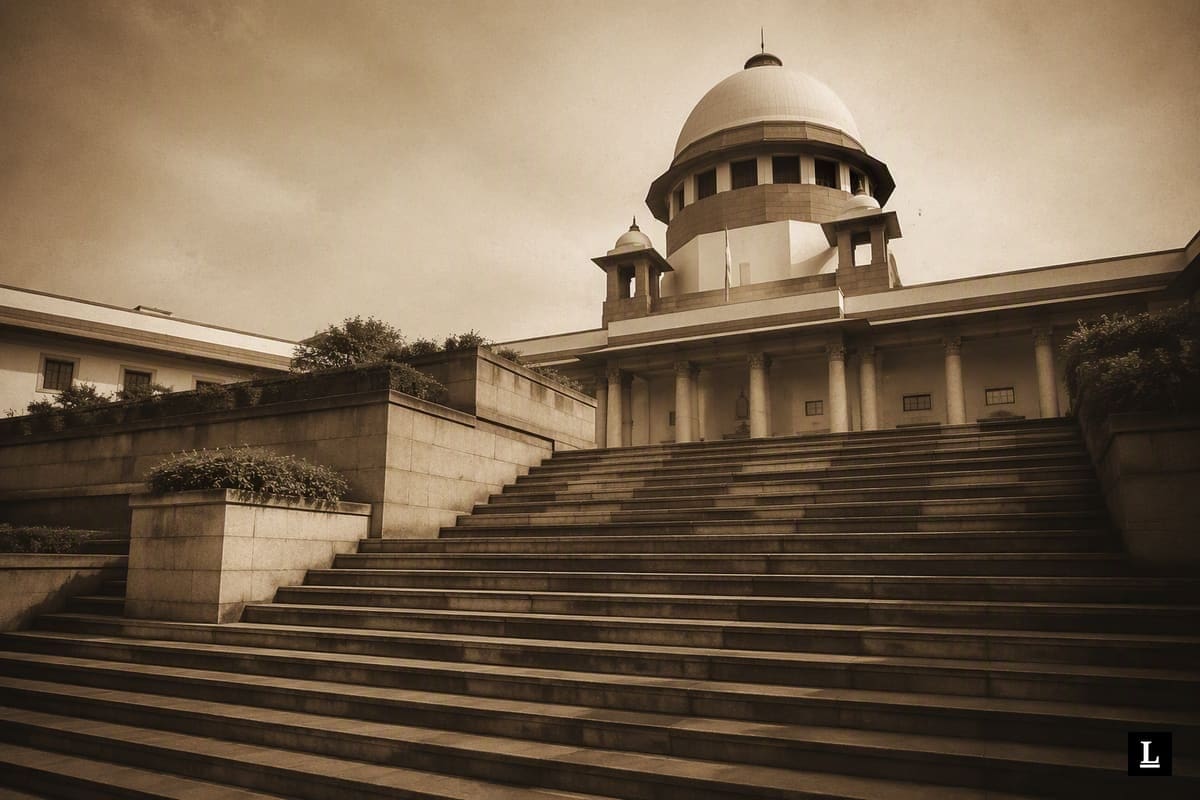
Article 142 of the Constitution of India empowers the Supreme Court to pass such decree or make such order as is necessary for doing complete justice in any cause or matter pending before it. This provision is a unique and potent instrument, granting the apex court an extraordinary reservoir of power to ensure that justice is not merely administered but is seen to be done, even if it means going beyond the letter of existing statutes or procedural rules. It is a constitutional recognition of the Court's role as the ultimate arbiter of justice, allowing it to mould relief to meet the exigencies of a particular situation where strict adherence to law might lead to injustice.
The Constitutional Mandate of Article 142
Article 142 states: "The Supreme Court in the exercise of its jurisdiction may pass such decree or make such order as is necessary for doing complete justice in any cause or matter pending before it, and any decree so passed or order so made shall be enforceable throughout the territory of India in such manner as may be prescribed by or under any law made by Parliament and, until provision in that behalf is so made, in such manner as the President may by order prescribe." This text underscores two critical aspects: first, the power is inherent to the Court's jurisdiction and can be exercised in any pending matter; second, the orders passed under this Article have nationwide enforceability. The framers of the Constitution envisioned this power as a safety valve, enabling the Court to address unforeseen circumstances and ensure that no litigant is left without a remedy due to technicalities or gaps in the law.
Interpreting "Complete Justice": Scope and Evolution
The phrase "complete justice" is not defined, allowing the Supreme Court considerable latitude in its interpretation. Early jurisprudence established that this power is not a power to ignore the substantive provisions of law, but rather to supplement them. In Union Carbide Corporation v. Union of India (1991), the Supreme Court famously invoked Article 142 to approve a settlement between the Union Carbide Corporation and the victims of the Bhopal Gas Tragedy, overriding statutory provisions that might have delayed or complicated the compensation process. This case highlighted the Court's ability to act as a benevolent dispenser of justice, especially in situations involving large-scale public interest. Subsequent judgments have clarified that while the power is vast, it must be exercised with caution and only to achieve justice in the specific facts and circumstances of a case, not to lay down general principles of law that contradict statutory provisions.
Illustrative Applications: Beyond Statutory Constraints
Article 142 has been invoked in a wide array of cases, demonstrating its versatility. It has been used to:
- Quash criminal proceedings where their continuance would be an abuse of process, even if statutory provisions for quashing might not strictly apply.
- Grant divorce by mutual consent even when the statutory cooling-off period under the Hindu Marriage Act, 1955, has not expired, if the Court is satisfied that the marriage has irretrievably broken down and further waiting would cause undue hardship.
- Direct the transfer of cases from one court to another to ensure fair trial or convenience.
- Appoint committees or special investigation teams to oversee investigations or implement judicial directives, particularly in matters of public importance or environmental protection.
- Fashion remedies that are not explicitly provided for in statutes, such as directing compensation for victims of crime or human rights violations, or ensuring environmental restoration. The common thread in these applications is the Court's determination to achieve a just and equitable outcome that might otherwise be unattainable through conventional legal channels.
Judicial Self-Restraint and Defined Limitations
Despite its expansive nature, the Supreme Court has consistently held that the power under Article 142 is not a power to legislate or to override substantive provisions of law in a general sense. In Supreme Court Bar Association v. Union of India (1998), the Court clarified that while Article 142 allows it to depart from statutory provisions to do complete justice, it cannot be used to supplant substantive law or to create new rights or liabilities not contemplated by law. The Court emphasized that the power is to be exercised sparingly and only in cases where the existing law is inadequate to meet the ends of justice. It cannot be used to nullify the provisions of a statute or to pass orders that are inconsistent with the fundamental principles of justice. Furthermore, the power is to be exercised in the exercise of its jurisdiction, meaning it cannot be invoked to entertain matters that do not fall within the Court's established jurisdiction.
Significance for the Rule of Law and Citizens
Article 142 serves as a crucial constitutional safeguard, ensuring that the Supreme Court retains the flexibility to deliver justice in complex and unprecedented situations. It reinforces the judiciary's role as the ultimate protector of rights and upholder of the rule of law, even when faced with statutory rigidities. For citizens, this means that the Supreme Court has the ultimate authority to intervene and provide relief when all other legal avenues prove insufficient to secure a just outcome. It acts as a powerful deterrent against potential injustices arising from legislative gaps or procedural bottlenecks, ensuring that the spirit of justice prevails over its mere form.
Article 142 was deliberately included in the Constitution by its framers to provide the Supreme Court with an inherent power to do 'complete justice' in exceptional circumstances. It was designed to prevent any miscarriage of justice due to legislative lacunae or procedural constraints. This provision reflects the constitutional philosophy that the Supreme Court, as the highest court, should have the necessary authority to ensure justice in its fullest sense, acting as a corrective mechanism when other legal frameworks prove inadequate.
For an ordinary citizen or litigant, Article 142 represents the Supreme Court's ultimate power to rectify injustices, even if it means bypassing strict legal procedures or statutory limitations. It offers a ray of hope in cases where conventional legal remedies might fall short, ensuring that the Court can provide tailored relief to achieve a fair and equitable outcome. However, it is an extraordinary power, invoked only by the Supreme Court, and not a routine avenue for relief.
Have a question on this?
Ask LuricIO AI about this judgement, the provisions involved, or your own matter, and get a court-ready answer.
An evergreen explainer by LuricIO Intelligence on a landmark judgement or key provision of Indian law. Always confirm the current statute and the latest authorities against the official record.
An AI-generated explainer by LuricIO Intelligence on a key provision or landmark judgement of Indian law. It may contain errors and is not legal advice, independently verify the current statute and the latest judgements against the official record before relying on it.
Related analyses
See all in Supreme CourtSupreme Court of India
Supreme Court Refuses to Monitor Cauvery Water Release
4 min read

Supreme Court of India
Society Tag No Shield From Article 12: Supreme Court
3 min read

Supreme Court of India
SC Declines Urgent Hearing on Festival Airfare Hikes
4 min read

Supreme Court of India
SC: Voter Awareness Is Not Election Body Monopoly
4 min read
