Madras High Court
Physical Attributes Insufficient for Caste or Religion Determination, Rules Madras High Court
The Madras High Court recently held that physical characteristics like skin tone, height, or hair texture cannot be the sole basis to ascertain an individual's caste or religious identity. This ruling came while setting aside a committee's order that invalidated a community certificate based on such superficial observations.
 By LuricIO Intelligence
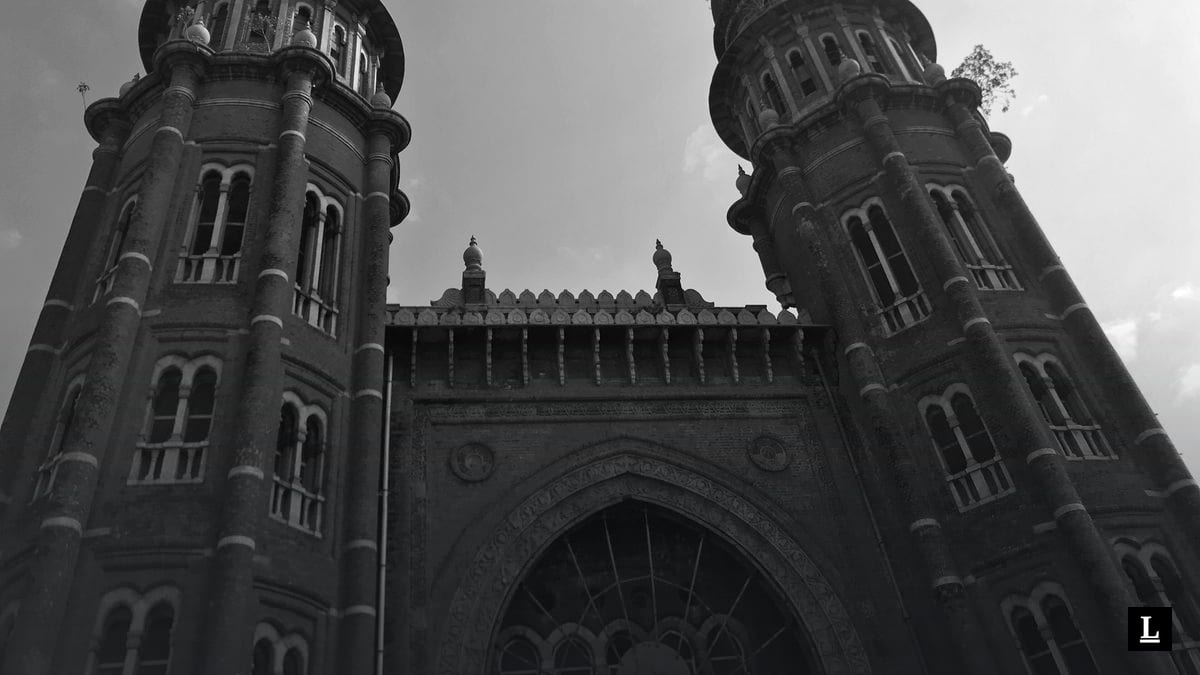
The Madras High Court has underscored that physical attributes, including complexion, height, and hair type, are not determinative factors for establishing a person's caste or religion. The Court emphasized that such assessments, especially without expert anthropological evaluation, are legally unsound when verifying community certificates. This observation was made while quashing an order issued by a District Level Vigilance Committee that had invalidated a man's community certificate primarily based on his physical appearance.
The Committee's Flawed Reasoning
The case involved M. Ravikumar, who challenged the District Level Vigilance Committee's decision to deem his Adi Dravidar (Scheduled Caste) community certificate as not genuine. The committee's reasoning for invalidating the certificate included observations that Ravikumar and his family were fair-skinned, tall, well-built, spoke both Tamil and English, and had curly hair. Additionally, the committee cited alleged Christian practices, such as his father being buried in a Christian cemetery and his daughter's name appearing as Christian in an old ration card, to conclude that the family was professing Christianity rather than Hinduism.
High Court's Stance on Physical Attributes
Justice Bharatha Chakravarthy of the Madras High Court critically examined the committee's reliance on physical characteristics. The Court held that a person's complexion, height, or linguistic proficiency cannot be the sole or primary evidence to prove their religious affiliation or community status. The judgment highlighted the absence of any anthropological evaluation in the committee's assessment, rendering its conclusions on physical attributes arbitrary and irrelevant. The Court noted that while adherence to Hindu or Christian deities might be relevant, physical appearance holds no bearing on such determinations.
Reconversion and Community Status
Ravikumar had contended that his father, originally from the Hindu Adi Dravidar community, had converted to Christianity but later reconverted to Hinduism, along with Ravikumar himself, through ceremonies at an Arya Samaj centre. He asserted that his family consistently practiced Hinduism, citing his and his daughters' marriages performed according to Hindu rites. The High Court acknowledged these submissions and found that the committee had not adequately considered the evidence presented regarding reconversion and current religious practices. The Court also pointed out inconsistencies in the committee's findings, such as the discrepancy between the daughter's birth year and the ration card entry.
Directions for Re-evaluation
Setting aside the committee's order, the Madras High Court directed that Ravikumar be granted a fresh opportunity for a personal hearing. He was instructed to appear before the authorities within four weeks and submit all relevant documents, including photographs and other materials, to substantiate his claim of following Hinduism. The Court further mandated the vigilance committee to conduct a fresh inquiry and pass a reasoned order within eight weeks of the petitioner's appearance, ensuring a fair and comprehensive re-evaluation of his community certificate claim.
Community certificates are crucial documents in India, enabling access to reservations and benefits for Scheduled Castes, Scheduled Tribes, and Other Backward Classes. The process of verifying these certificates is stringent to prevent misuse, often involving vigilance committees. This judgment aligns with established legal principles that emphasize actual social acceptance and adherence to community customs, rather than external physical traits, as the basis for determining caste and religious identity, especially in cases involving conversion or reconversion.
This ruling offers significant relief and clarity for citizens whose community certificates are challenged based on arbitrary criteria. It reinforces that physical appearance cannot be used to deny one's caste or religious identity, protecting individuals from discriminatory assessments. Citizens facing similar challenges can now rely on this precedent to argue against decisions based on superficial observations rather than substantive evidence of their community affiliation or religious practices.
Have a question on this?
Ask LuricIO AI about this judgement, the provisions involved, or your own matter, and get a court-ready answer.
This is LuricIO's independent analysis. For the original report, quotes, and full coverage, read the source.
LuricIO Intelligence's AI-generated analysis of this development and the law behind it. It may contain errors and is not legal advice, independently verify the facts and the primary source against the official record before relying on it.
Related analyses
See all in High CourtsMadras High Court
Madras High Court Restrains Use of Fan Persona
4 min read

Madras High Court
Madras HC: Physical Traits Irrelevant for Community Certificate Decisions
3 min read
Madras High Court
Madras High Court Prioritises Child Welfare in Custody Dispute
3 min read

Madras High Court
Udhayanidhi Stalin Arrested, Released on Station Bail After Madras High Court Intervention
4 min read