Jharkhand High Court
Jharkhand High Court Stays Exam Cancellations, Protests Lead to Multiple FIRs
The Jharkhand High Court recently intervened in a state government decision, staying the cancellation of several recruitment examinations, which subsequently triggered public protests. This judicial action and the ensuing demonstrations have resulted in the registration of three First Information Reports, highlighting the legal complexities surrounding public employment and dissent.
 By LuricIO Intelligence
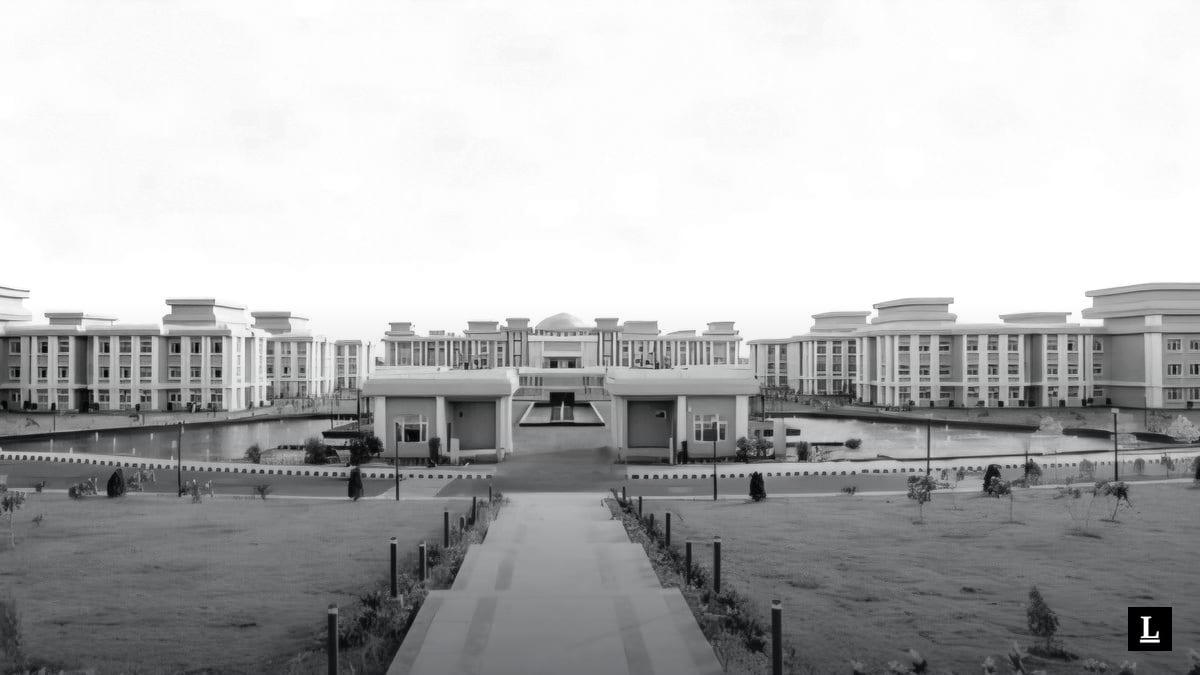
The Jharkhand High Court has recently issued a stay order on the state government's decision to cancel multiple recruitment examinations and appointments. This judicial intervention followed the government's earlier move to annul 21 recruitment tests, a decision made in response to sustained student agitation over alleged irregularities in state recruitment processes. The High Court's stay prompted further public protests in Ranchi, during which clashes reportedly occurred, leading to the registration of three First Information Reports (FIRs) under the Bharatiya Nagarik Suraksha Sanhita (BNSS).
The High Court's Intervention and its Immediate Aftermath
The state government had previously cancelled several recruitment examinations, including those for the 11th to 13th JPSC Combined Civil Services, Food Safety Officers (FSO), JSSC Combined Graduate Level (JSSC-CGL), and Child Development Project Officer (CDPO). This action was a direct outcome of a month-long agitation by students protesting alleged irregularities. However, candidates aggrieved by the government's cancellation notification approached the Jharkhand High Court, which subsequently stayed the executive order. This judicial stay then became the catalyst for fresh protests, organised by groups like the JPSC-JSSC Reforms Manch, which included plans for effigy burning across the state.
Allegations and Criminal Proceedings
Following the protests, three separate FIRs were lodged, naming 15 individuals and several unknown persons. One complaint, filed by Shahbaz Alam, alleged that he and a friend were assaulted and chased by a mob of 200-250 people after questioning their anti-government slogans. He further claimed that a coaching teacher and three students instigated the crowd. Conversely, the JPSC-JSSC Reforms Manch denied these allegations, asserting that police and individuals linked to the Jharkhand Mukti Morcha (JMM) attempted to disrupt their march, leading to a lathi-charge. Another complaint, from Shiv Shankar Pandey, a Circle Officer deployed as a magistrate, accused protesters of deviating from the approved route, proceeding without permission, and assaulting a woman and two men. A third complaint, by Ankita Verma, alleged she was attacked and mauled by protesters who suspected her of belonging to an opposing group. Police sources also indicated that protesters changed their route, caused traffic congestion, clashed with citizens, and attempted to lynch individuals, necessitating police intervention. The JMM has disavowed any organisational involvement, attributing the clashes to opposition party workers.
Legal Framework for Public Gatherings and Judicial Review
The filing of FIRs initiates criminal proceedings under the Bharatiya Nagarik Suraksha Sanhita (BNSS). Depending on the specific allegations, charges could potentially include offences related to unlawful assembly, rioting, assault, and criminal intimidation under the Bharatiya Nyaya Sanhita (BNS). Public protests, while a fundamental right, are subject to reasonable restrictions, including requirements for prior permission and adherence to designated routes to maintain public order. The High Court's power to stay executive orders, such as the cancellation of recruitment exams, stems from its inherent power of judicial review. This power allows the judiciary to scrutinise the legality and constitutional validity of government actions, ensuring that executive decisions are not arbitrary or in violation of fundamental rights. In this instance, the High Court's stay implies a prima facie concern regarding the legality or fairness of the government's cancellation order, pending a full hearing on the merits of the petitions.
Balancing Executive Action and Judicial Scrutiny
This situation underscores the delicate balance between the executive's authority to formulate and implement policy, particularly in public employment, and the judiciary's role in upholding the rule of law and protecting citizens' rights. While governments have the prerogative to address irregularities and ensure fair recruitment, such decisions must withstand judicial scrutiny to prevent arbitrary actions. The High Court's stay temporarily restores the status quo, allowing for a thorough examination of the government's reasons for cancellation and the petitioners' grievances. The subsequent protests and criminal complaints highlight the social and legal tensions that can arise when judicial pronouncements impact significant public policy matters, especially those affecting a large number of job aspirants.
The principle of judicial review, enshrined in the Indian Constitution, empowers High Courts and the Supreme Court to examine the legality of executive and legislative actions. This power ensures that government decisions, including those related to public employment and examination cancellations, are not arbitrary and adhere to constitutional principles and statutory provisions. Historically, courts have played a crucial role in safeguarding fairness and transparency in public recruitment, often intervening to protect the rights of candidates against procedural irregularities or arbitrary policy changes by the executive.
For job aspirants, the High Court's stay creates uncertainty regarding the status of the cancelled examinations, potentially prolonging their wait for clarity on recruitment processes. For citizens participating in protests, the filing of FIRs serves as a reminder of the legal boundaries governing public demonstrations, with potential criminal liability for actions deemed unlawful. The incident also highlights the importance of understanding one's rights and responsibilities during public gatherings to avoid legal repercussions.
Have a question on this?
Ask LuricIO AI about this judgement, the provisions involved, or your own matter, and get a court-ready answer.
This is LuricIO's independent analysis. For the original report, quotes, and full coverage, read the source.
LuricIO Intelligence's AI-generated analysis of this development and the law behind it. It may contain errors and is not legal advice, independently verify the facts and the primary source against the official record before relying on it.
Related analyses
See all in High CourtsDelhi High Court Bar Association
Bar Association Objects to Central Motor Vehicles Rules Amendments on Challan Adjudication
4 min read
Karnataka High Court
Karnataka High Court Upholds VC Appointment, Clarifies Quo Warranto Scope
3 min read
Delhi High Court
Delhi High Court Seeks WFI's Response on Disciplinary Action and Maternity Policy for Athletes
3 min read
Bombay High Court
Bombay High Court Rebukes FDA for Hasty License Suspensions, Stresses Proportionality
4 min read
